Tips for Creating a Relaxing and Productive Home Office Environment
Creating a home office that balances relaxation and productivity is key to maintaining both your work efficiency and your well-being. Whether you’re new to working from home or looking to improve your existing workspace, a well-designed office can make all the difference. Here are practical tips to help you build a home office environment that supports focus, creativity, and calmness.
Choose the Right Location
Selecting the best spot for your home office sets the foundation for your productivity.
– Natural light: Opt for a space with plenty of natural light. Sunlight boosts mood and helps regulate your circadian rhythm, which can keep you alert during work hours.
– Quietness: Choose a quiet area away from noisy appliances, household traffic, or distractions.
– Comfortable size: Make sure the space is large enough to accommodate your desk, chair, and any equipment without feeling cramped.
Invest in Comfortable, Ergonomic Furniture
Your furniture should support your body and prevent discomfort during long work sessions.
– Ergonomic chair: Look for an adjustable chair with good lumbar support to maintain healthy posture.
– Desk height: Ensure your desk height allows your arms to rest comfortably at a 90-degree angle.
– Standing options: Consider a sit-stand desk or a desk converter to vary your posture during the day.
Organise Wisely for Clear Focus
A tidy office encourages concentration and reduces stress.
– Declutter regularly: Remove unnecessary items from your desk and storage areas.
– Use storage solutions: Boxes, shelves, and drawers help keep supplies organised and out of sight.
– Designate zones: Create separate areas for computer work, paperwork, and meetings to reduce mental clutter.
Control Lighting and Screen Glare
Proper lighting helps avoid eye strain and creates a pleasant atmosphere.
– Layer lighting: Combine natural light with overhead lights and task lamps to balance brightness.
– Adjust screen position: Place your monitor at eye level and perpendicular to windows to minimise glare.
– Use softer bulbs: Choose bulbs with warm or neutral white light to avoid harshness.
Add Personal Touches Mindfully
Personalising your space can make it inviting without distracting you.
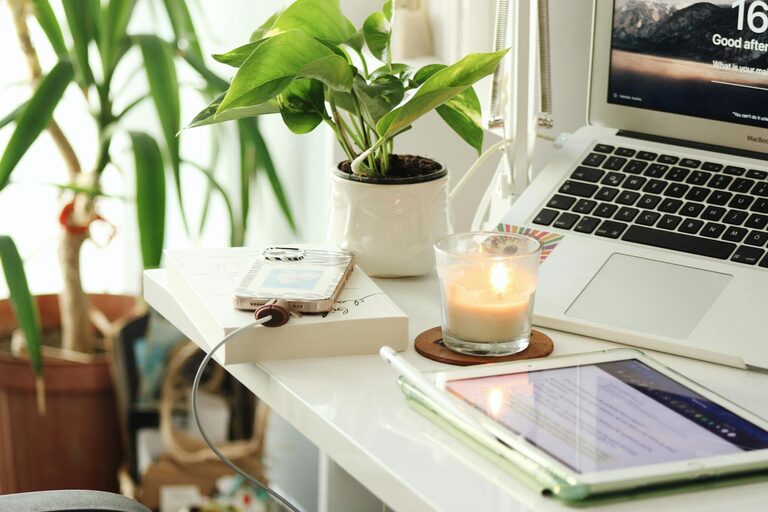
– Plants: Small indoor plants improve air quality and provide a sense of calm.
– Artwork: Hang art that inspires you but avoid overly busy designs.
– Scent: Use subtle scents like lavender or eucalyptus for a relaxing environment, but be mindful of sensitivities.
Manage Noise and Distractions
Reducing unwanted noise helps maintain focus.
– Noise-cancelling headphones: These are useful if complete quiet is hard to achieve.
– Soundproofing: Soft furnishings like rugs, curtains, and cushions absorb sound.
– White noise: A white noise machine or app can mask distracting background sounds.
Maintain Good Air Quality and Temperature
Comfortable air promotes alertness and health.
– Ventilation: Open windows regularly or use air purifiers to refresh the air.
– Temperature: Keep the room at a comfortable temperature, usually between 20-22°C.
– Humidity: Use a humidifier if air is too dry, especially in winter.
Establish Routines and Boundaries
A structured routine supports productivity and work-life balance.
– Set working hours: Define clear start and finish times to avoid overworking.
– Breaks: Schedule regular breaks to stretch and rest your eyes.
– Separate work and leisure: Close your office door or clear your desk after hours to mentally separate work from home time.
Use Technology to Your Advantage
The right tools can simplify tasks and help maintain organisation.
– Task management apps: Use apps like Trello or Asana to track your work progress.
– Cable management: Keep cables organised with clips or sleeves to avoid clutter.
– Reliable internet: Ensure your internet connection is stable for video calls and online tasks.
Keep It Flexible
Your needs may change, so design your space to adapt.
– Modular furniture: Choose pieces that can be rearranged easily.
– Multiple work spots: If space allows, create options like a standing desk and a comfortable chair for reading or brainstorming.
– Storage upgrades: Invest in storage that can evolve as your work tools change.
—
By thoughtfully designing your home office with these tips, you can create a space that supports both relaxation and productivity. This balance will help you stay focused, motivated, and comfortable throughout your workday. Remember, the key is to create an environment tailored to your personal preferences and work style.